

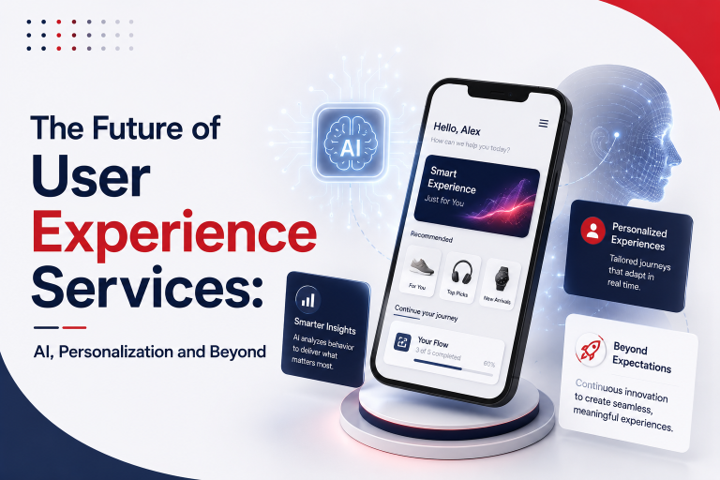
Digital interactions have moved far beyond static web pages. Standard templates and rigid menus no longer hold attention, nor do they drive conversions. Today, users expect an online presence that understands what they need instantly and responds without friction.
Building a website that actively drives growth requires moving past traditional layout design. The shift is already underway – smart platforms now rely on real-time adaptation, predictive layouts, and automated tailoring to deliver continuous performance. Investing in modern user experience services helps turn everyday site visits into valuable long-term customer relationships.
The Shift in User Experience Services
Traditionally, digital product design operated on fixed assumptions. Wireframes catered to idealized personas, while user journeys followed predetermined, linear paths. While that structured approach established basic web usability standards years ago, it often created friction when actual user needs collided with rigid menus.
Today, advanced UI/UX design services are replacing those fixed blueprints with dynamic experience engines. Rather than routing every visitor through identical checkout funnels or static dashboard panels, modern platforms leverage machine learning models to alter interfaces on the fly. Layouts reconfigure based on historical engagement patterns, contextual cues, and immediate situational triggers.
This evolution requires a fundamental change in how digital platforms get built. Design teams no longer draw static visual screens. Instead, they build modular systems, responsive component libraries, and smart algorithmic parameters that allow digital interfaces to adjust naturally to every interaction.
Hyper-Personalization That Goes Beyond Simple Rules
First-generation personalization was limited to basic rules. It displayed product recommendation grids based on broad purchase categories or greeted returning users by name. Today’s market demands deep behavioral personalization – systems that actively anticipate user needs without creating cognitive fatigue or annoyance.
Many companies now deploy machine learning models within daily customer-facing software, with early adopters reporting clear revenue gains from personalized workflows. However, genuine hyper-personalization goes far past simple product carousels. It shapes how information gets organized, presented, and acted upon in real time:
-
Predictive Workflow Adaptation
Enterprise tools evaluate recurring habits to surface critical metrics, streamline multi-step tasks, and suppress secondary options during high-focus sessions.
-
Contextual Interface Morphing
Visual components dynamically adjust contrast, density, and button spacing depending on lighting conditions, device capabilities, and immediate user focus.
-
Intent-Driven Information Architecture
E-commerce platforms reorganize category layouts and search results dynamically based on active intent signals rather than static taxonomy trees.
Partnering with an experienced UI/UX design company allows enterprises to implement these advanced capabilities responsibly – balancing custom convenience with data privacy, platform performance, and intuitive navigation.
The AI Integration Framework: Generative UI and Agentic Workflows
Artificial intelligence is changing the role of digital interfaces from passive displays into active task co-pilots. The introduction of generative user interfaces and autonomous agentic workflows enables software to interpret user intent and assemble bespoke, task-specific views on demand.
Rather than forcing users to manually click through five levels of nested navigation or complete repetitive multi-page forms, modern strategic UX design implements intelligent agentic flows. Users state their goals through natural language inputs or simple cues, while background scripts assemble the exact tools, form fields, and summary cards needed to finish the work right then.
This setup simplifies intricate operational tasks like enterprise resource management, financial forecasting, or logistics planning, turning complex administrative steps into clean digital interactions.
Working alongside a specialized UX agency in the USA gives businesses the technical execution and structural planning necessary to deliver smooth, connected digital interactions across every physical and virtual touchpoint.
Micro-Interactions and Accessibility as Core Growth Drivers
Visual aesthetics alone no longer guarantee web retention. Subconscious psychological triggers driven by micro-interactions and absolute accessibility form the backbone of modern web execution.
Subtle motion cues provide immediate tactile feedback during web interactions. Visitors are reassured that their activities are processed properly via progress indications, responsive button hover states, and seamless scroll transitions. These small features help visitors stay focused on doing their intended activity and lessen cognitive burden.
Concurrently, web accessibility has shifted from a secondary compliance task to a central business strategy. Building sites aligned with modern accessibility standards ensure complete usability for all visitors across every device type.
- Performance Speed
Light codebases and optimized media delivery ensure rapid load times, directly reducing bounce rates.
- Readable Typography & Contrast
Well-structured type hierarchies and compliant color ratios make web content effortless to digest.
- Touch-Optimized Navigation
Mobile navigation elements sized for natural thumb zones prevent accidental clicks and frustration.
This level of adaptation requires specialized user experience services that bridge sophisticated architecture with intuitive visual design.
Structured Roadmap for Web Modernization
Adopting adaptive user experience practices requires an organized, step-by-step approach. A proven UI/UX design process progresses through four essential stages:
- Discovery and Behavioral Audit
Review current conversion pathways, identify drop-off points, and evaluate technical readiness.
- Component Design
Build a flexible, system-wide design library containing dynamic modules, interface states, and clear typography rules.
- System Integration
Connect analytics platforms, testing tools, and rendering engines directly to your site core.
- Continuous Refinement
Use live operational data to refine component rules, test new design combinations, and maximize conversion performance.
Ambient Intelligence and Multimodal Interaction
The era of relying exclusively on clicks and taps is fading. Modern user interfaces are expanding into voice, touch, gesture, and predictive automation.
Platforms adopt ambient assistant models. These systems operate quietly in the background, offering helpful suggestions when required while staying unobtrusive when not.
Core Multimodal Principles for Modern Applications
- Assistive Copilots Over Autonomous Automation
AI features should guide users rather than take complete control without approval. Giving users clear previews and easy manual overrides builds trust.
- Fluid Material Design
Visual layers are adopting depth, subtle translucency, and contextual light cues. Motion serves a direct purpose guiding visual focus and confirming actions rather than acting as visual decoration.
- Cross-Device Continuity
Seamless transitions between web, mobile, and wearable touchpoints keep user progress intact across different physical environments.
Delivering these outcomes requires a strategic UX design focused on human-in-the-loop governance. Designers must build intuitive confirmation screens, clear status indicators, and transparent undo actions, so users remain confident while autonomous agents handle background execution.
Balancing Automated Efficiency with Human Trust
While automated systems and predictive models offer considerable speed, they also bring distinct usability difficulties. Highly automated systems can cause user confusion, hide data management settings, or frustrate people with unprompted layout shifts.
Building sustainable digital growth means balancing automated intelligence with clear human oversight:
- Transparent Algorithmic Feedback
Ensuring automated platforms clarify why certain recommendations, or interface adjustments occur, protecting user confidence.
- Direct Manual Controls
Providing clear override settings so people can quickly adjust, reset, or bypass automated layouts whenever they want.
- Ethical Data Privacy Practices
Designing straightforward data collection flows that safeguard user information while retaining helpful context.
A disciplined UI/UX design company balances modern automation capabilities with proven human-centered design principles, keeping the website reliable, clear, and easy to control.
Conclusion
The future of digital growth belongs to websites that adapt, anticipate, and deliver immediate value. Moving past static layouts to embrace intelligent personalization helps modern organizations build online platforms that drive measurable results. Partnering with proven user experience services ensures your digital footprint remains competitive, scalable, and prepared for continuous growth.
